
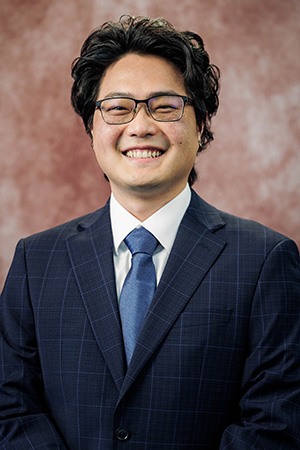
In December, after he completed his final core clerkship as a third-year medical student at WMU Homer Stryker M.D. School of Medicine (WMed), Yoshi Yamakawa turned his attention to preparing and studying for the United States Medical Licensing Examination (USMLE) Step 2 CK.
Yamakawa, who hopes to pursue residency training in Medicine-Pediatrics after medical school, said the dedicated study time – which is built into the MD curriculum at WMed during the months of January and February of M3 year – is invaluable and sets him and his fellow classmates up for success for what can be a challenging step in their journey as aspiring physicians.
“Thank goodness we have that dedicated time,” Yamakawa said recently. “I cannot imagine a world where I am doing other things while studying for Step 2.”
In those first two months of 2026, preparing for Step 2 shaped Yamakawa’s days as a third-year student at WMed. Between home and the W.E. Upjohn M.D. Campus, he dedicated the hours from 8 a.m. to 5 p.m. to preparing for the exam, whether studying alone at home, meeting friends at the medical school, or attending weekly review sessions with other students in the Class of 2027.
“I need a lot of time and I need to be on a consistent schedule for an extended period of time to do the questions and do the reviews,” Yamakawa said. “I think the resources WMed gives us, including practice exams, are incredibly useful in that process.”
On his final core rotation before preparation for Step 2 began, Yamakawa completed a seven-week Internal Medicine clerkship. During the clerkship, his days often began as early as 4 a.m. when Yamakawa would wake up to prepare for his 15-minute commute to arrive by 6 a.m. to Bronson Methodist Hospital.
- 4 a.m. – Wake up, shower and eat breakfast, typically cereal or a breakfast burrito. At times, a granola bar suffices for a first meal if running behind.
- 5:45 a.m. – Departs with a light lunch in tow for his 15-minute commute to Bronson Methodist Hospital.
- 6 a.m. – Arrival to Bronson where he checks in with the attending physician and nurses to see what the day might bring.
- 6 a.m.-3 p.m. – Rounds and checking in with patients and their families. Also keeps an eye on the status of lab work and tests for the patients assigned to his care.
- 3-5 p.m. – Time for studying and reviewing flash cards, going over notes, and watching lectures.
- 5 p.m. – Homeward bound.
- 6-7 p.m. – Feeds and walks his dogs. Dinner time with his wife.
- 7-9 p.m. – Study time at home in his office.
- 9-11 p.m. – Watches TV with his wife, reads, or takes time out to play video games.
- 11 p.m. – Bedtime.
A Day in the Life of M3 Yoshi Yamakawa
His mornings would begin with a shower followed by a quick breakfast often consisting of cereal or a breakfast burrito. On a morning when he was running behind, a granola bar would suffice for his first meal of the day, he said.
“Breakfast is important," Yamakawa said.
He made sure to lay out all of his essentials for the day – laptop, stethoscope, and notepads – the night before each shift and grabbed a light lunch before heading out the door. He began each day at the hospital checking in with attending physicians and nurses to see what the day might bring. During rounds, he chats and checks in with patients, and takes a look at the status of lab work and tests for the patients assigned to his care.
“We get really good experience in terms of continuity of care where we get to see the same patients consistently and care for multiple patients at a time on a shift,” Yamakawa said. “It’s a good precursor to our future as residents when we could have as many as 10 patients at a time that we may be in charge of.”
Prior to coming to WMed, Yamakawa completed a pre-med track at Purdue University and worked as a medical scribe at IU Health Arnett Hospital in West Lafayette, Indiana. During that time, he said he got an up-close look at how physicians at the hospital handled the pressures of caring for multiple patients at a time. As a third-year student, he said he is now gaining that experience and is appreciative that it occurs at a gradual pace.
“I made it a point to spend time in each of my patients’ rooms after morning rounds to see how they were doing and also check in with their family members,” Yamakawa said. “WMed does a really good job during our pre-clinical years of preparing and training us to interact with and learn from our patients and their families.”
During his rotation on Internal Medicine, Yamakawa said he also spent time each day studying, often finding a spot in the hospital where he could review flash cards and questions, or listen to recordings of lectures.
“During pre-clinical years, I relied heavily on group studying with my classmates at the Upjohn Campus but once you start rotations, that group becomes smaller, schedules are different and you have to adapt to doing more independent studying,” he said.
By 4 p.m., Yamakawa said his day at the hospital was done, allowing him to arrive home most days by 5 p.m. At home, feeding his dogs and taking them for a walk was first on his list. After that, he and his wife would prep for dinner and he would squeeze in a little more study time in his home office, if possible.
By 9 or 10 p.m., he said he and his wife were settled in for the night and are taking time to watch an episode of a show together. By 11 p.m., it was lights out and time to rest up for what the next day might bring.
“Every clinical rotation during my M3 year has been critical in shaping how I view medicine and how I want to practice medicine, and it all informs how I want to do medicine in the future,” Yamakawa said.